Introduction: Why Bearing Selection Matters
When a 50-ton mining crusher experiences unexpected downtime, the root cause often traces back to a single component: the bearing. In heavy-duty industrial applications, bearing selection isn’t just a procurement decision—it’s a critical engineering choice that affects equipment reliability, maintenance costs, and overall operational efficiency.
This guide walks through the systematic approach to selecting tapered roller bearings for demanding applications, drawing from real-world case studies and engineering best practices. We’ll examine key selection criteria, common pitfalls, and how leading manufacturers like TIMKEN have engineered solutions for specific industry challenges.
Understanding Tapered Roller Bearing Fundamentals
What Makes Tapered Roller Bearings Unique?
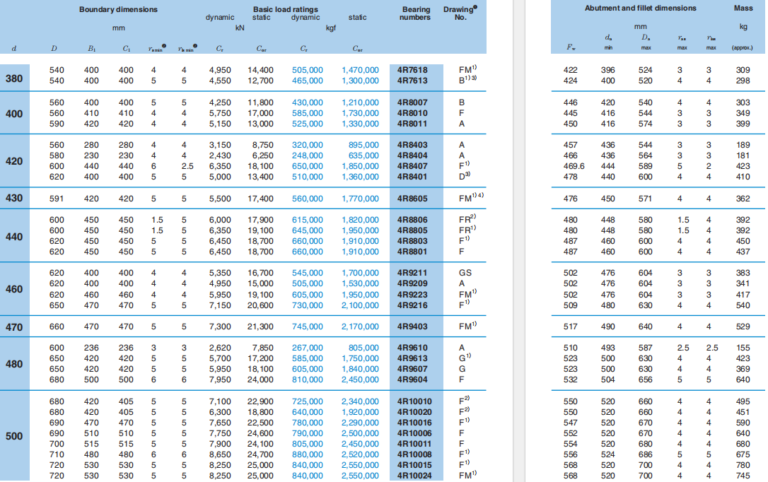
Unlike deep groove ball bearings that primarily handle radial loads, tapered roller bearings feature conical rolling elements that enable them to support combined radial and axial loads simultaneously. This makes them ideal for applications such as:
- Automotive wheel hubs and differentials
- Industrial gearboxes and speed reducers
- Rolling mill stands in steel production
- Railway axle boxes and traction motors
- Wind turbine main shafts and yaw systems
- Construction equipment final drives

The Geometry Advantage
The tapered design creates line contact between rollers and raceways (compared to point contact in ball bearings), distributing loads over a larger surface area. This fundamental geometric difference explains why tapered roller bearings excel in:
- Heavy radial loads – Mining conveyor pulleys, crane sheaves
- Significant axial loads – Vertical pumps, extruder screws
- Shock and vibration – Off-road vehicles, seismic testing equipment
Key Selection Criteria: A Systematic Approach
1. Load Analysis
Before selecting a bearing, engineers must quantify both radial (Fr) and axial (Fa) loads. The equivalent dynamic load (P) is calculated using:
P = X·Fr + Y·Fa
Where X and Y are factors determined by the bearing’s contact angle and the ratio Fa/Fr. This calculation is critical because:
- Underestimating loads leads to premature fatigue failure
- Overestimating results in oversized, costly bearings
- Dynamic vs. static load ratings serve different purposes
Practical Example: A paper machine roll operating at 500 RPM with 15kN radial load and 3kN axial load requires careful calculation to select the appropriate 22200 series spherical roller bearing.
2. Speed Considerations
Every bearing has a limiting speed—the maximum RPM before heat generation from friction exceeds dissipation capacity. Factors affecting speed capability:
| Factor | Impact on Speed Rating |
|---|---|
| Lubrication type | Oil circulation allows higher speeds than grease |
| Cage design | Machined brass cages handle higher speeds than stamped steel |
| Bearing size | Smaller bearings generally achieve higher DN values |
| Clearance class | C3/C4 clearances accommodate thermal expansion at speed |
3. Environmental Conditions
Operating environment dramatically affects bearing life. Consider:
- Temperature extremes: Standard bearings operate from -30°C to +120°C. Special heat-treated bearings are required for kiln applications (200°C+) or cryogenic pumps (-100°C).
- Contamination: Mining and cement plants present severe contamination challenges. Sealed or shielded bearings with specialized lip designs prevent particle ingress.
- Moisture: Marine and offshore applications require corrosion-resistant materials or specialized coatings.
- Chemical exposure: Food processing and pharmaceutical applications need FDA-compliant lubricants and stainless steel components.

Common Failure Modes and Prevention
Understanding Why Bearings Fail
Industry studies show that premature bearing failures rarely result from material defects. Instead, typical root causes include:
1. Lubrication Issues (36% of failures)
- Insufficient lubricant: Starved operation causes metal-to-metal contact
- Wrong lubricant: Viscosity too low for operating conditions
- Contaminated lubricant: Particles act as abrasives, accelerating wear
- Prevention: Implement oil analysis programs, use automatic lubrication systems
2. Contamination (14% of failures)
- Particle ingress: Dust, dirt, metal chips enter bearing
- Water contamination: Causes corrosion and lubricant breakdown
- Prevention: Proper sealing, clean assembly practices, filtered breathers
3. Misalignment (16% of failures)
- Shaft deflection: Excessive bending under load
- Housing distortion: Improper mounting or thermal growth
- Prevention: Use self-aligning bearings, precision machining, laser alignment tools
4. Improper Installation (12% of failures)
- Brinelling: Raceway damage from hammering during installation
- Incorrect fits: Too loose causes creep; too tight reduces internal clearance
- Prevention: Use induction heaters, hydraulic mounting tools, follow manufacturer specifications
Case Study: Wind Turbine Main Shaft Bearing Selection
The Challenge
A wind farm operator experienced repeated main shaft bearing failures in 3MW turbines. Bearings were failing at 18-24 months despite rated L10 life of 175,000 hours (20 years).
Investigation Findings
- Variable loading: Wind gusts created shock loads 3x higher than design calculations
- Thermal cycling: Daily temperature swings from -20°C to +60°C affected internal clearance
- Lubrication breakdown: Grease life exceeded in harsh North Sea environment
- Misalignment: Tower flex under wind load caused shaft deflection
Engineering Solution
The solution involved multiple design changes:
- Bearing upgrade: Switched to TIMKEN ultra-high-purity steel with case carburizing
- Sealing improvement: Added labyrinth seals with grease purge capability
- Monitoring system: Installed vibration sensors for predictive maintenance
- Lubrication system: Implemented automatic grease injection with condition monitoring
Results
After retrofitting 47 turbines:
- Zero bearing failures in 36 months of operation
- Maintenance intervals extended from 6 to 18 months
- Estimated savings: €2.3M in avoided downtime and replacement costs
Material Science: What Makes Premium Bearings Different?
Steel Quality Matters
Not all bearing steel is created equal. Premium manufacturers like TIMKEN invest heavily in metallurgy:
Vacuum Degassed Steel
Removing oxygen and hydrogen during steel production reduces non-metallic inclusions that act as fatigue initiation sites. This process can extend bearing life by 2-3x compared to standard air-melted steel.
Case Carburizing
This heat treatment creates a hard, wear-resistant surface (58-62 HRC) over a tough, ductile core (30-40 HRC). The result:
- Surface hardness resists wear and spalling
- Tough core absorbs shock loads without cracking
- Compressive residual stresses inhibit crack propagation
Specialized Coatings
For extreme applications, coatings provide additional protection:
- Black oxide: Corrosion resistance, reduced friction during break-in
- Zinc-nickel: Severe corrosion protection for offshore applications
- DLC (Diamond-Like Carbon): Extreme wear resistance for high-speed applications
Maintenance Best Practices
Extending Bearing Life Through Proper Care
Even the best bearing will fail prematurely without proper maintenance. Key practices:
Lubrication Management
- Right type: Match grease/oil viscosity to operating conditions
- Right amount: Over-lubrication causes heat buildup; under-lubrication causes wear
- Right interval: Follow manufacturer recommendations, adjust for actual conditions
- Cleanliness: Use filtered dispensing equipment, never mix incompatible lubricants
Condition Monitoring
- Vibration analysis: Detect early-stage defects before catastrophic failure
- Temperature monitoring: Sudden temperature rise indicates problems
- Oil analysis: Particle counting and spectroscopy reveal wear patterns
- Ultrasound: Detect lubrication issues and early-stage bearing defects

When to Consult a Bearing Specialist
While this guide covers common selection scenarios, certain situations warrant expert consultation:
- Novel applications: First-time design with no historical data
- Extreme conditions: Temperatures beyond standard ranges, severe contamination
- Critical equipment: Failures would cause significant safety or financial impact
- Recurring failures: Repeated premature failures indicate systemic issues
- Cost optimization: Large-volume applications where small improvements yield significant savings
Experienced bearing distributors maintain engineering staff who can provide:
- Bearing selection and sizing calculations
- Failure analysis and root cause investigation
- Alternative bearing recommendations for cost reduction
- On-site training for maintenance teams
For technical support on bearing selection or to discuss specific application requirements, engineering teams at specialized distributors like CMTG Bearing can provide detailed consultation. Reach out at sales@cmtgbearing.com or visit www.cmtgbearing.com for comprehensive bearing solutions across multiple brands including TIMKEN, SKF, NSK, and FAG.
Conclusion
Selecting the right tapered roller bearing for heavy-duty applications requires systematic analysis of loads, speeds, environmental conditions, and maintenance capabilities. By understanding bearing fundamentals, common failure modes, and material science principles, engineers can make informed decisions that maximize equipment reliability and minimize total cost of ownership.
Remember: the cheapest bearing option often proves most expensive over the equipment lifecycle. Invest in quality, implement proper maintenance, and consult specialists when needed. Your equipment—and your bottom line—will thank you.
Keywords: tapered roller bearing selection, bearing engineering guide, heavy-duty bearings, industrial bearing applications, bearing failure analysis, TIMKEN bearings, bearing maintenance best practices, bearing load calculation